Nullam dignissim, ante scelerisque the is euismod fermentum odio sem semper the is erat, a feugiat leo urna eget eros. Duis Aenean a imperdiet risus.
Loading
Nullam dignissim, ante scelerisque the is euismod fermentum odio sem semper the is erat, a feugiat leo urna eget eros. Duis Aenean a imperdiet risus.
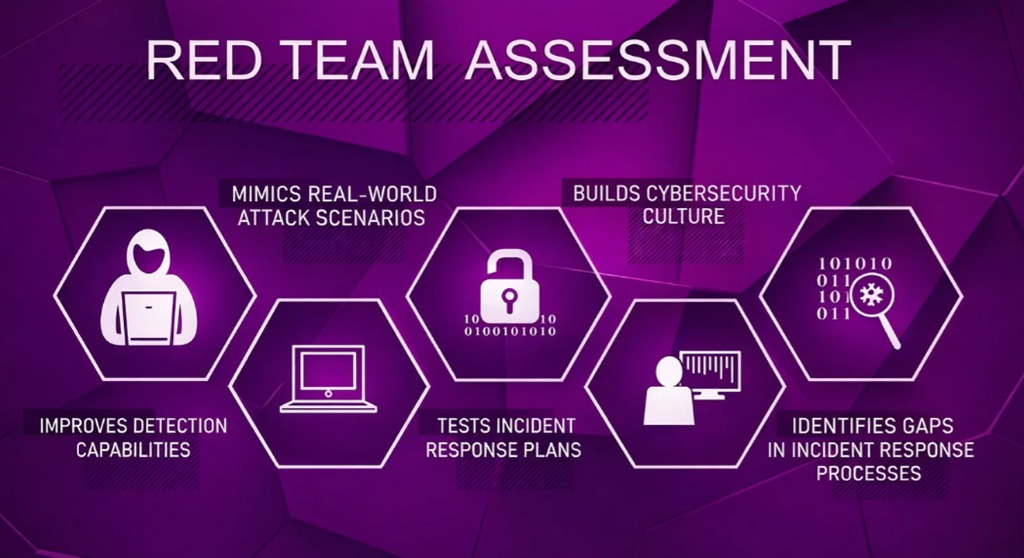
Red teaming is a strategic, objective-driven security assessment that simulates sophisticated adversaries to test your organization's detection, response, and resilience capabilities. Unlike traditional penetration testing that focuses on finding vulnerabilities, our red team engagements replicate end-to-end attack campaigns—from initial breach through lateral movement, privilege escalation, and objective completion. We combine network exploitation, web and mobile application attacks, social engineering, wireless intrusion, and physical security testing to validate your security posture under realistic conditions. The result is not just a list of vulnerabilities, but a narrative-driven intelligence report that reveals exactly how an attacker thinks, moves, and operates within your environment—enabling you to strengthen defenses, refine detection rules, and build a truly resilient security program.
Our red teaming methodology goes beyond technical exploitation. We understand that building a resilient security posture requires aligning your people, processes, and technology with your organizational objectives. We work closely with leadership and security teams to foster a culture of vigilance, accountability, and continuous improvement. By educating your workforce on adversary tactics, detection fundamentals, and incident response best practices, we empower your entire organization—not just your security team—to contribute to a stronger, more adaptive defense. The result is not just a report, but a transformed security mindset that endures long after the engagement concludes.
Define objectives, boundaries, target systems, and success criteria—ensuring alignment with business risk and compliance requirements.
Passive and active OSINT to map your digital footprint, identify attack surfaces, and profile personnel for social engineering.
Execute realistic entry vectors—phishing, external exploitation, or physical intrusion—to establish foothold without detection.
Maintain access and escalate privileges through credential theft, misconfigurations, or zero-day techniques—mimicking advanced adversaries.
Pivot across systems, compromise Active Directory, and achieve domain dominance while evading EDR/SIEM detection.
Achieve defined goals (e.g., data theft, system disruption) and simulate stealthy data exfiltration to validate detection gaps.
Deliver narrative-driven findings with attack timelines, detection failures, and prioritized remediation—plus collaborative workshops to harden defenses.